
Incongruence
Looking at the Space Between Who We Say We Are and Who We Actually Are

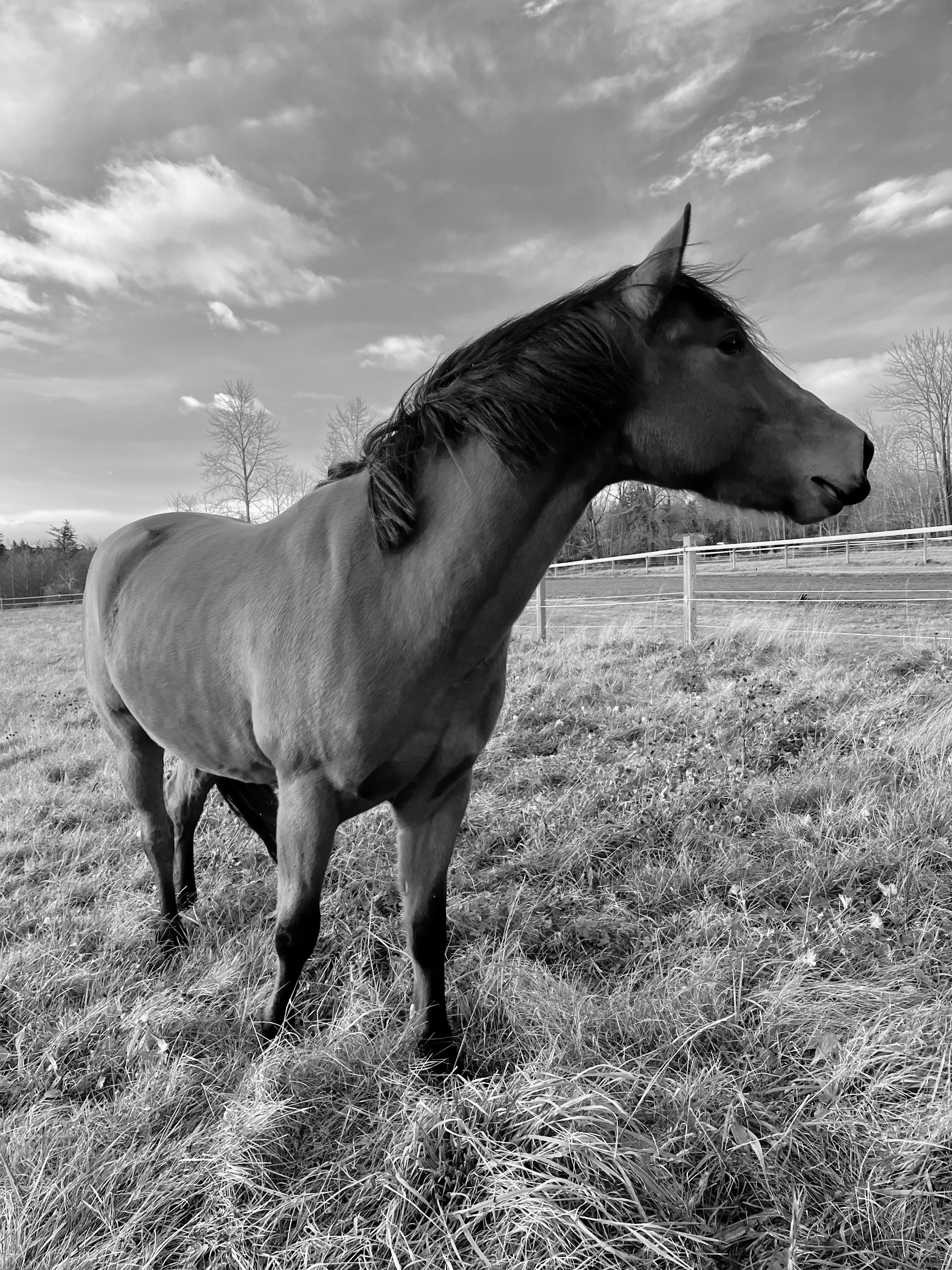
My cowboy said it to me once, the kind of admission that stops a conversation cold. We were on horseback, riding the mountain at dawn, cold rain falling harder and harder on our slickers and saddles. He was deep in thought, his mind in that space where people sometimes let real things slip. He looked at his life—the wreckage, the stuckness, the years he couldn’t get back—and said, “I’m responsible for my life as it stands.”
He offered no story arranged to soften it, just the raw admission that where he’d ended up was where he’d walked himself with his own two feet. Aside from myself, I’d never heard someone admit this to themselves, let alone out loud to another person. I said to him, “You know you can go anywhere now, because of what you’ve just said and what you’ve realized. That’s the insight that lets you change the trajectory at any point.”
That kind of ownership hands you back something you thought you’d lost forever. You get to author what comes next because you’ve finally admitted you were directing your life with your choices all along. Bitter as hell, but real in a way that most people’s stories about themselves never become. That day’s conversation etched itself into me because of how rare it is.
Fast forward to today. Lately, I’ve been observing the opposite—people who will never arrive at that moment. I’ve been meeting and interacting with people who have built entire selves around making sure they’ll never have to face the realization the cowboy had on the back of my horse. What’s more, they consciously and unconsciously make sure they don’t have to.
When What Someone Says and What They Do Stop Matching
The phenomenon I’m seeing is incongruence—specifically, incongruence as an architecture of avoidance. Once you start to see it clearly, you can’t stop noticing it everywhere.
When I say incongruence, I’m referring to the distance between what we say and what we do. Everyone navigates some space between who they claim to be and who they are when nobody’s keeping score. That’s just humans being humans, complicated and contradictory by nature.
But there’s a version of this distance that functions as a survival strategy, whether its owner knows it or not. It protects them from ever having to stand in the weight of what they’ve actually done. Their own words become a shield they carry everywhere, deflecting accountability before it can land. The distance between their words and their actions isn’t a flaw they’re working on—it’s the architecture, doing exactly what it was built to do. It protects them while leaving someone else to absorb the repercussions.
Some Know, Some Don’t
What interests me is how differently people hold this distance, because not everyone operating incongruently knows they’re doing so.
Some people genuinely cannot see their own contradictions. The rationalizations they created hardened into fact somewhere along the way, and now whole chapters of their behavior simply don’t exist in the story they tell themselves each morning. To them, they’re not being dishonest in any way they’d recognize. They’ve just edited the inconvenient parts out so thoroughly that the original version no longer exists for them.
And then there are those who understand exactly what they’re doing, who have constructed personas with full knowledge of what they conceal. This isn’t an unconscious pattern or old wound playing out—this is an operation deliberately maintained for preservation and personal gain. They know, and they don’t care, because the behavior serves them.
The person standing across from either type absorbs the impact just the same. Whether someone misleads you from blindness, convenience, or intention, you’re still navigating a reality that doesn’t match what you’re being told.
Their awareness changes what it says about them.
It doesn’t change what it does to you
What You Do When You See It Clearly
So what happens when you clock the incongruence in someone who can’t or won’t see it themselves? Seeing clearly isn’t neutral. Awareness demands something in return for what it has shown you.
You could name it—speak the contradiction out loud, point to the distance between their words and their actions. But something in you tells you to pause. You already know how it will unfold before you open your mouth. The naming becomes the problem. They rearrange the facts while you watch, and suddenly you’re the one who’s off-base, who doesn’t understand, who’s making something harder than it needs to be. Their refusal of ownership runs so deep that your accuracy registers only as attack. You become the one labeled difficult, aggressive, rigid. You become the problem.
So you find yourself weighing what else is available. You could stay silent and watch the performance continue while holding what you know. That costs something too—the erosion of standing inside something you see straight through, the exhaustion of participating in a fiction while holding receipts that will never get entered into evidence. There’s a particular kind of tiredness that comes from knowing a truth you aren’t allowed to speak.
Or you realize the energy expenditure isn’t worth it. You see what you’re dealing with, you understand there’s no balance of shared accountability to be found, and you decide to walk away. You slip quietly out the back door and leave this person to their reality. It’s clean. It’s kind to yourself.
There Is No Answer Here
None of these options change people who live incongruently. That’s what took me years to learn. You cannot make someone see their own incongruence through sheer force of observation, no matter how accurate your perception. You cannot language them into ownership, no matter how clearly you name what’s happening.
The only question that belongs to you is this:
What are you willing to participate in now that you see the architecture you’ve been standing inside?
For me, I’m not willing to participate. I’ll disengage quietly and walk away because I promised myself nothing is worth my mental or physical health. Some people will never have the moment my cowboy had on that mountain, that raw admission that changes everything. The incongruence has become load-bearing for them, holding up too much of their story to ever dismantle. They can’t afford to close the distance because it’s the only thing keeping the whole structure standing.
This piece doesn’t end with what to do next. It’s just recognition—that the distance exists, that it serves a function, and that once you see it operating you can’t unsee it. And it’s an admission that you can’t do a thing about it except decide where you’re willing to stand, and how long you’re willing to stand there.